Bay & bow windows
A bay or bow window projects out from the wall to flood a room with light and hand you a little extra floor space — perfect for a window seat or a sunny reading nook. Here’s the difference between the two, and what to think about before you fit one.
Bay vs bow: what’s the difference?
The two are cousins, and people often use the names interchangeably, but they have distinct looks:
- Bay windows are made from flat panes set at angles, giving a faceted, angular projection — typically three sections, with a large central window flanked by two angled sides. This is the classic bay-fronted terrace and semi look.
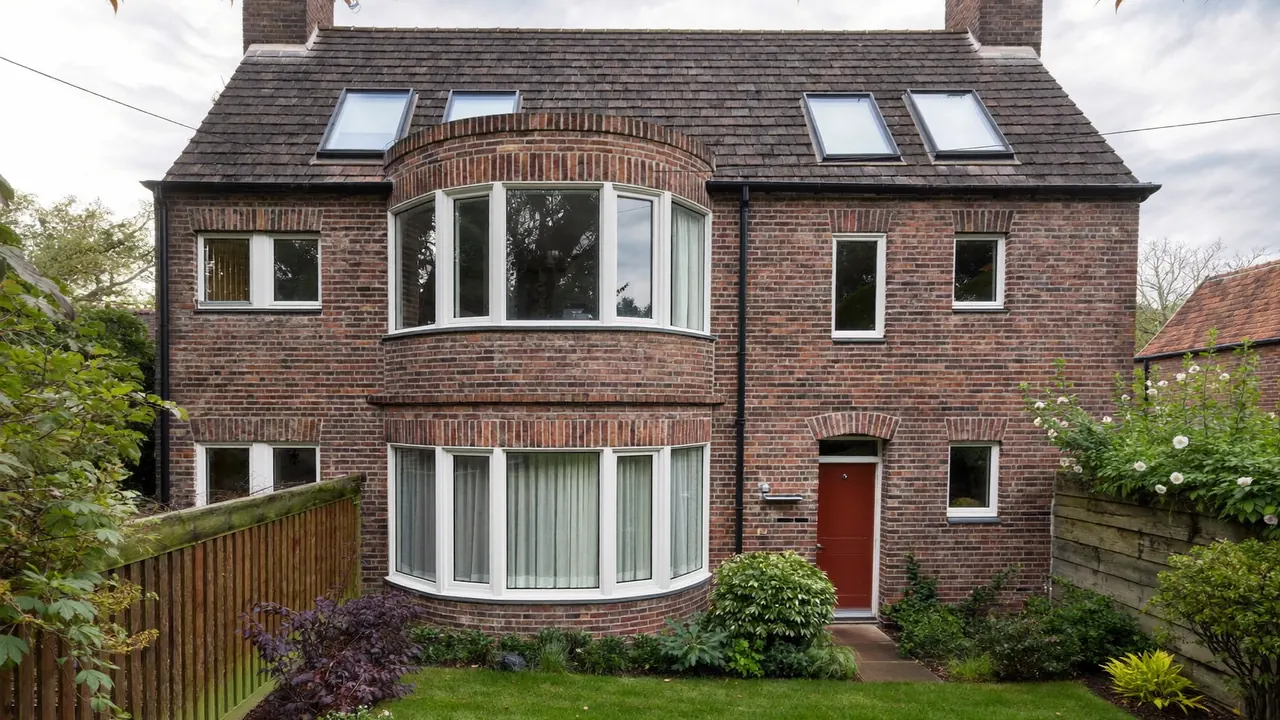
- Bow windows use four, five or more equal panes joined at shallow angles to form a gentle, sweeping curve. The effect is softer and more rounded than a bay.
Both are built up from individual window units — usually casement windows or sash windows — so you can match the opening style and glazing bars to the rest of your home.
Light, space and kerb appeal
Because they push beyond the wall line, bays and bows pull in daylight from three or more directions and make a room feel noticeably larger. The projection also creates a shelf inside — ideal for a seat, plants or storage — and gives the front of a house real presence. On period properties, restoring an original bay is often the single biggest improvement you can make to the frontage. Whatever your style of house, there really are windows for every home, and a well-proportioned bay is hard to beat for character.
Picture a bay on your home
Share your postcode and a local installer will price up a bay or bow that suits your frontage — free and with no obligation.
Structure and support — the bit that matters
A bay or bow often carries some load from the wall above, so a proper replacement isn’t just a glazing job — it may need a support system (jacks, load-bearing posts or a structural head) to take the weight safely. A good installer will assess this at the home survey and specify the right build, which is exactly why a bay should never be a rushed, cut-price fit. It’s also worth thinking about the glass: for a big, light-grabbing bay you might want solar-control or low-E units, and you can get glass options priced alongside the frames.
Not sure a bay is right for your style of property? Our window styles by home type hub matches projecting windows to terraces, semis and detached homes. These guides also pair well:
Budgeting for a bay
Because of the extra structural work and larger glass area, bays and bows are usually one of the pricier window projects — so it’s worth planning the spend. Funding and contribution options may be available for those who qualify, subject to eligibility and a home survey, and £0-upfront options may be available for some households. For a larger frontage project, read up on funding routes for bigger projects before you commit.
Get your bay or bow priced
Answer two quick questions and a vetted local installer will arrange your free, no-obligation quote.